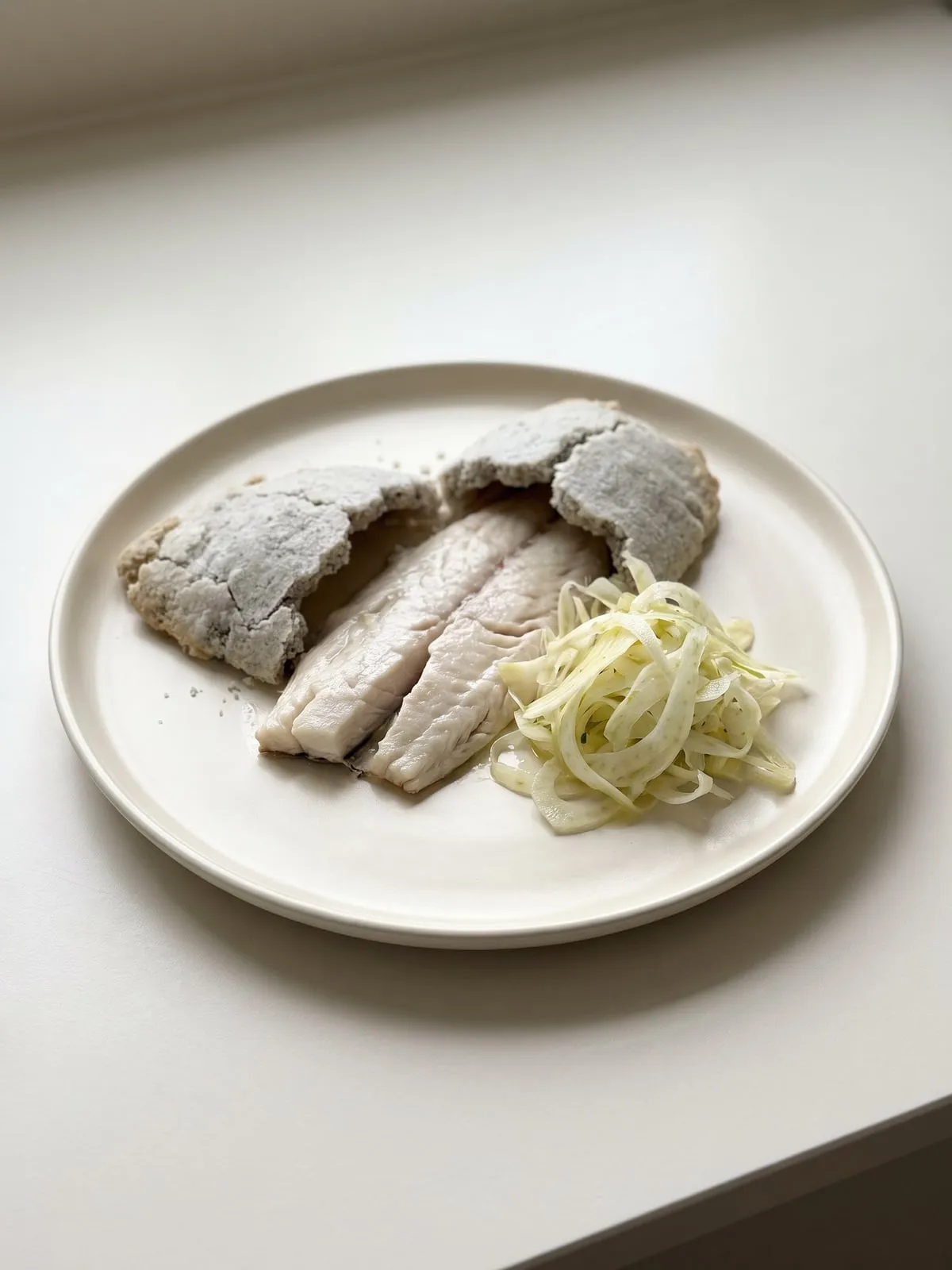
Sea Bass in a Salt Crust with Fennel
45 min (20 min active) · 1 serving · Medium · Gluten-free · Lactose-free
Recipe development: Samuel Ringer
Method
- 1
Preheat the oven to 200 °C (fan oven 180 °C) and line a baking sheet with parchment paper. Pat the sea bass dry inside and out. Slice ¾ of the lemon into 3 mm thick slices and set the remaining quarter aside. Fill the belly of the fish with the lemon slices and 4 sprigs of thyme.
- 2
In a bowl, mix 800 g of coarse sea salt, the egg whites, and 60 ml of water for 3 minutes until a moist mixture forms that holds together in your fist.
- 3
Spread ⅓ of the crust mixture in the shape of the fish, 1 cm thick, on the baking sheet. Place the fish on top, cover completely with the remaining mixture, and press firmly all around.
- 4
Bake the fish in the preheated oven at 200 °C for 25 minutes, until the crust is hard and shows fine cracks.
- 5
Meanwhile, clean the fennel, cut out the core, and slice the bulb into 2 mm thin strips. Squeeze the lemon quarter.
- 6
In a second bowl, mix the fennel with the lemon juice, olive oil, honey, 2 pinches of salt, and pepper, and let it sit for 10 minutes until the strips soften. Tear the leaves from the remaining 2 sprigs of thyme and sprinkle on top.
- 7
Break the crust all around with the back of a knife and lift it off in one piece. Remove the skin and use a knife to separate the fillets from the bones.
- 8
Plate both fillets with the fennel salad and the baguette.
Tips
- Keep the skin intact when stuffing, so the fish absorbs little salt from the crust.
- You can also use a sea bream of the same size instead of sea bass.
Related topics
More recipes
- Persian Joojeh Kebab with Saffron Chicken526 kcal
- Provençal Ratatouille Casserole with Feta399 kcal
- Ground Beef Burrito Bowl with Rice and Beans761 kcal
- Red Lentil Coconut Soup with Ginger411 kcal
- Mapo Tofu with Ground Beef754 kcal
- Yakitori Skewers with Rice560 kcal